Why Proper Drainage Matters: Practical Steps to Prevent Water Damage to Foundations in Pasadena, TX
Effective drainage means guiding surface and subsurface water away from your home so the soil around footings and slabs stays stable. That stability prevents hydrostatic pressure and soil expansion from damaging the foundation. This guide walks you through how water moves foundations, the warning signs to watch for, and the practical drainage fixes that work best for Pasadena — from French drains and yard regrading to sump pumps and root barriers. You’ll learn why Pasadena’s expansive clay magnifies seasonal moisture swings, why catching issues early saves money, and which preventive steps avoid costly repairs later. We also compare common options, offer simple maintenance checklists, and explain how Pasadena Foundation Repair Pros weaves drainage into foundation stabilization — including a free inspection and estimate. Start by understanding how water causes damage so you can choose the most effective solutions for your property.
Why Is Proper Drainage Crucial for Protecting Your Foundation?
Good drainage lowers the hydrostatic pressure pushing on walls and slabs and reduces the swelling and shrinking of moisture-sensitive soils. By moving water away from footings and keeping soil moisture consistent, drainage systems stop the forces that cause differential settlement and uplift — protecting structural alignment and interior finishes. Proper drainage also prevents erosion and washout around foundation elements that can create voids and weaken load-bearing soil. In short, drainage is a practical, first-line defense against progressive foundation damage — not a cosmetic add-on — and it directly addresses how water harms foundations.
How Does Water Cause Foundation Damage Through Hydrostatic Pressure and Soil Expansion?
Hydrostatic pressure builds when groundwater or saturated soil pushes sideways against foundation walls and upward under slabs, creating loads that concrete wasn’t designed to resist. Expansive clay soils compound the problem: they swell when wet and shrink as they dry, producing vertical movement — heave during saturation and settlement during drying — that stresses concrete and connections. Repeated wet/dry cycles plus concentrated surface flow or ponding speed up cracking, cause sticking doors and windows, and create uneven floors through differential movement. Understanding this sequence helps homeowners focus on fixes that relieve pressure and stabilize moisture before structural repairs become necessary.
What Are the Risks of Poor Drainage in Pasadena’s Expansive Clay Soil?
Pasadena’s common expansive clay reacts strongly to small moisture changes, so even modest variations in soil water content can create large volume shifts that transfer stress to foundations and slabs. Periodic heavy storms quickly wet the ground while clay’s slow drying causes extended contraction and long-term settlement if water isn’t controlled. Compacted landscaping or poor grading that prevents runoff increases the risk of localized saturation and concentrated settlement next to the foundation. Because of these local soil behaviors, drainage plans in Pasadena should blend surface and subsurface measures tailored to clay — not rely on one-size-fits-all fixes.
What Are the Common Signs of Poor Foundation Drainage to Watch For?

Drainage-related foundation problems usually show up in visible, measurable ways — and they often get worse over time. Look for cracks in walls and slabs, doors or windows that bind, sloping or uneven floors, water pooling near foundation lines, and musty smells or mold in crawlspaces and basements. Checking your home after storms and doing seasonal inspections helps separate cosmetic issues from structural concerns that need a professional. The list below highlights the primary warning signs so you can act before damage escalates.
- Cracks in walls and slabs: Linear or stair-step cracks that widen over time often point to soil movement.
- Doors and windows that stick: Binding or misaligned openings usually mean frames or foundations have shifted.
- Uneven floors or gaps at baseboards: Differential settlement causes floors to slope and trim to separate.
- Pooling water near the foundation: Standing water raises subsurface saturation and increases pressure on foundations.
- Musty odors and mold in low areas: Persistent moisture inside signals exterior drainage failure or ongoing seepage.
If you see several of these signs, schedule a professional inspection to determine whether the solution is drainage correction, foundation stabilization, or both. Early intervention typically reduces repair scope and cost and prevents progressive structural damage.
How Do Cracks, Uneven Floors, and Water Pooling Indicate Drainage Problems?
Crack patterns tell a lot: hairline shrinkage cracks are usually cosmetic, while stair-step, wide vertical, or horizontal cracks suggest differential settlement or lateral pressure from saturated soil. Floors that slope toward an exterior low spot often reflect soil consolidation where water pooled and weakened support under the slab. Water standing next to foundation walls increases hydrostatic pressure and capillary action, allowing moisture to travel beneath slabs and into crawlspaces — which makes movement worse over time. Examining crack patterns and moisture behavior near affected areas helps determine whether the cause is surface runoff, subsurface flow, or both, and it guides whether grading, drains, or combined remedies are needed.
Why Are Musty Odors and Mold in Basements Warning Signs of Drainage Issues?
Musty smells and visible mold in basements or crawlspaces usually mean ongoing moisture intrusion, often from poor exterior drainage or failing perimeter systems. Water can enter through joints, cracks, or capillary action when surrounding soil stays saturated, creating the damp conditions mold needs and accelerating material decay. Beyond health concerns, chronic dampness damages structural wood, insulation, and finishes and often points to a systemic drainage problem rather than a one-off leak. Finding mold should trigger source identification — for example, nearby pooling or downspout discharge — and corrective steps like perimeter drains or sump systems to lower interior humidity and soil saturation.
Which Effective Drainage Solutions Prevent Foundation Problems in Pasadena, TX?
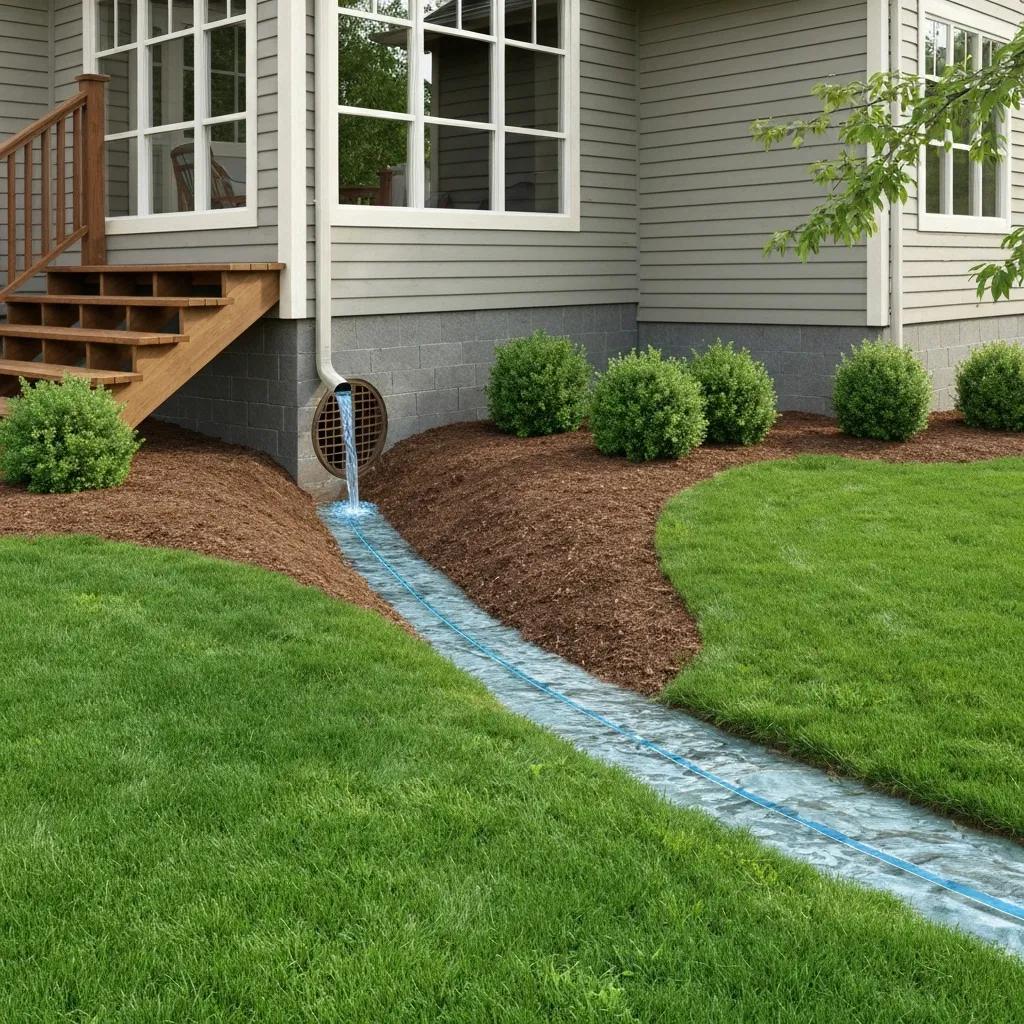
Proven drainage fixes reduce hydrostatic pressure, control runoff, and stabilize moisture near foundations. The right mix depends on soil type, lot slope, and nearby trees or structures. Common solutions include French drains, yard grading and regrading, improved gutters with downspout extensions, interior sump pumps, and root barriers near mature trees. In Pasadena’s clay soils, combining surface and subsurface tactics usually works best: grading limits new inflow while subsurface systems relieve lateral pressure already against the foundation. The table below compares these options by cost, maintenance, and best uses so homeowners can weigh trade-offs and choose the right approach.
Different drainage approaches vary by cost, complexity, and suitability for Pasadena conditions.
Matching the mitigation to the moisture pathway gives the best results; often a hybrid solution — grading plus drains and downspout work — provides the most lasting protection. Proper design and routine maintenance keep systems functioning over time.
How Does French Drain Installation Redirect Water and Reduce Hydrostatic Pressure?
A French drain captures subsurface water in a sloped trench lined with geotextile fabric and gravel and a perforated pipe that carries water to a safe discharge point, lowering lateral hydrostatic pressure against foundations. By intercepting groundwater before it reaches footings, the system reduces saturation in the active soil zone and limits expansion and settlement cycles in clay soils. For Pasadena, installers must consider trench depth, pipe slope for gravity flow, and where the discharge will go so it doesn’t create problems for neighbors. Routine checks — clearing surface inlets, inspecting outlets, and confirming flow — prevent clogging and preserve the drain’s effectiveness.
What Role Do Yard Grading and Gutter Extensions Play in Managing Water Runoff?
Yard grading and downspout extensions are the first line of defense: they stop excess water from pooling near foundation edges by creating positive slopes and moving roof runoff away from the house. A common recommendation is several inches of drop within the first 5–10 feet from the foundation, combined with downspout extensions or splash blocks that carry water beyond that zone. In heavy clay, grading needs stable compaction and erosion control because clay sheds water and can wash out. These lower-cost measures work best when paired with subsurface systems where groundwater or a high water table is an issue, since grading alone won’t relieve deep hydrostatic pressure.
How Can Sump Pumps and Root Barriers Protect Foundations from Moisture Damage?
Sump pumps manage interior water by collecting it in a basin and pumping it away from the home, preventing buildup in basements and crawlspaces and lowering inward hydrostatic force. Backup power and redundant pumps improve reliability during storms when power failures and heavy inflows happen together. Root barriers, installed vertically between large trees and foundations, limit root spread and the moisture-drawing that changes soil moisture gradients; barrier depth and material vary by tree species. Pairing interior dewatering with exterior measures such as French drains and root barriers offers a comprehensive defense against both the movement of water and biological drivers of moisture change.
If you’re considering installation, Pasadena Foundation Repair Pros and our trusted drainage partners can assess soil and site conditions, recommend the right mix of systems, and handle installations that respect local constraints and proper discharge routing.
How Does Pasadena Foundation Repair Pros Address Drainage-Related Foundation Issues?
At Pasadena Foundation Repair Pros we include drainage in our foundation repair plans by tracing moisture pathways, recommending targeted drainage work, and combining those measures with stabilization when movement has already started. Our drainage-related services include polyurethane foam injection to stabilize soils beneath slabs, root barrier installation to stop tree-driven moisture shifts, and coordinating French drain and sump pump work as part of repair projects. Serving Pasadena, TX and nearby communities, we provide a single point of contact to both stop moisture problems and correct the structural movement that followed. Our priority is long-term stability: control the water first, then stabilize the structure to reduce recurrence and protect your repair investment.
What Foundation Repair Services Include Drainage Solutions Like Polyurethane Foam Injection?
Polyurethane foam injection fills voids and re-supports concrete by expanding under slabs. When combined with exterior drainage corrections it becomes a two-part strategy: stop the moisture-driven movement, then restore bearing capacity. Pier-and-beam repairs, house leveling, and concrete slab repairs are typically scheduled alongside drainage interventions so corrected moisture conditions don’t undermine structural work. In practice, installing a perimeter French drain and fixing downspouts before foam injection reduces the hydrostatic forces that could otherwise cause future separation or sinkage. That sequence — control the water, then stabilize the structure — delivers longer-lasting results than structural repair alone.
How Do Free Estimates, Lifetime Warranties, and Flexible Financing Support Homeowners?
We help homeowners make confident decisions by offering Free Estimates that include an on-site inspection, a clear diagnosis of drainage or foundation causes, and a written plan that outlines recommended work and expected outcomes. A Lifetime Transferable Warranty on qualifying repairs gives owners and future buyers added protection, while Flexible Financing Options make timely preventative or corrective work more affordable. These protections encourage prompt action — often small drainage fixes early avoid much larger foundation repairs later — and remove barriers to getting the work done. Contact Pasadena Foundation Repair Pros for a free inspection and estimate to find the right combination of drainage and stabilization for your home.
What Are the Long-Term Benefits of Proper Foundation Drainage?
Investing in correct drainage pays off over time: fewer expensive repairs, improved structural stability, and preserved property value and livability. Preventive drainage controls reduce the frequency and severity of foundation movement, meaning fewer emergency fixes and longer life for structural elements, finishes, and systems. Well-documented drainage and repair work — including warranties and inspection reports — reassures buyers and can smooth resale negotiations. Comparing costs and savings makes clear why early drainage investment often offsets the much higher price of major foundation reconstruction.
Preventative drainage approaches are usually more economical than major foundation repairs.
These ranges show that targeted drainage and stabilization typically cost a fraction of full foundation reconstruction. Homeowners who document preventative work and keep warranties gain both functional protection and greater resale confidence.
How Does Preventative Drainage Save Thousands Compared to Reactive Foundation Repairs?
Preventative drainage breaks the cycle of soil saturation and structural movement, often keeping problems at the grading level before they progress to slab separation, extensive pier work, or full underpinning — all of which are far more expensive. For instance, a French drain or corrected grading can prevent differential settlement that would otherwise require costly slab leveling or multiple pier installations. Preventive work also lowers secondary expenses such as interior water damage, mold remediation, and cosmetic replacements. In Pasadena’s clay soils, small moisture reductions translate into disproportionately large reductions in movement and long-term repair needs, boosting ROI for preventive measures.
In What Ways Does Proper Drainage Increase Property Value and Structural Stability?
Proper drainage preserves visible and structural integrity — level floors, aligned doors and windows, and intact finishes — that buyers notice during inspections. Documentation of drainage work and transferable warranties reassures buyers and can strengthen your position in negotiations. Structurally stable homes need less ongoing maintenance, face fewer insurance concerns, and offer a longer useful life, making them more attractive on the market. For homeowners, benefits include fewer emergencies, lower energy costs from reduced dampness, and a healthier indoor environment when mold and humidity are controlled. Keeping inspection records and warranty paperwork provides a verifiable maintenance history that supports resale value.
How Can Homeowners Maintain Proper Drainage to Protect Their Foundations Year-Round?
Routine maintenance and seasonal checks keep drainage systems working and stop small problems from becoming foundation failures. For Pasadena homeowners, an annual inspection plus checks after major storms is a sensible baseline. Key tasks include clearing gutters and downspouts, confirming downspout discharge is well away from the foundation, checking perimeter grading for erosion or compaction, testing sump pumps and backups, and watching for root encroachment. These simple steps maintain system performance and surface early warning signs that need professional review. The checklist below gives practical, seasonal tasks you can follow to keep drainage effective.
Homeowner drainage maintenance checklist:
- Clean gutters and downspouts at least twice yearly: Remove leaves and debris so water flows freely and won’t overflow near the foundation.
- Extend downspouts away from the house: Make sure discharge lands several feet from the foundation to prevent pooling.
- Inspect and maintain slopes around foundation: Fill low spots and preserve a positive grade away from your home.
- Test sump pump and backup system before rainy season: Confirm the pump, float switch, and backup power work to protect interiors during storms.
Keeping these tasks up reduces the chance of water concentrating by the foundation and helps preserve your drainage investment. If DIY efforts don’t stop pooling or seepage, a professional inspection can reveal subsurface issues and recommend durable fixes.
Why Are Annual Drainage Inspections Important After Heavy Rainfall in Pasadena?
Annual inspections and extra checks after heavy rains catch changes in soil behavior, erosion, or failed components before they cause structural movement. Heavy storms speed saturation and soil displacement in clay-rich areas, so inspectors look for clogged drains, moved downspout outlets, new or widening cracks, interior seepage, and areas where grading has washed away. Documenting those findings supports timely preventive work and warranty claims if later repairs are needed. Regular inspection rhythms turn episodic storms into manageable maintenance steps that protect foundations over time.
What Simple Steps Can You Take to Ensure Gutters, Downspouts, and Grading Remain Effective?
Make surface drainage reliable with easy, repeatable tasks: clean gutters quarterly (especially in spring and fall), secure and extend downspouts so water discharges several feet from the foundation, and check grading after storms — refill low spots with compacted soil as needed. Manage vegetation by avoiding planting large trees too close to foundations and installing root barriers where big trees are already present. If pooling or seepage persists, get a professional assessment that may recommend French drains, sump pumps, or professional regrading. These practical steps keep drainage systems working and reduce the risk of foundation damage.
Contact Pasadena Foundation Repair Pros for a free inspection and estimate if you notice persistent pooling, growing cracks, or interior moisture. Our free inspection and estimate process pinpoints the drainage and structural combination that best protects your home. Serving Pasadena, TX and nearby communities, we combine drainage solutions — French drains, yard grading, sump pumps, and root barriers — with foundation stabilization like polyurethane foam injection and slab or pier repairs. Homeowners get Free Estimates, a Lifetime Transferable Warranty on qualifying repairs, BBB Accreditation, and Flexible Financing Options to make necessary prevention or repairs manageable. Scheduling an evaluation sooner rather than later helps preserve structural stability and maximize your property’s long-term value.
Frequently Asked Questions
1. What are the long-term effects of poor drainage on a home’s foundation?
Poor drainage can cause serious long-term issues: structural damage, higher repair bills, and lower property value. Over time, water can erode soil, cause uneven settling, and crack foundations — conditions that also encourage mold and mildew and harm indoor air quality. Regular upkeep and prompt repairs reduce these risks and help preserve foundation stability.
2. How often should homeowners inspect their drainage systems?
Inspect drainage systems at least once a year and after heavy storms. Routine checks spot clogs, erosion, or misaligned gutters and downspouts early. Seasonal maintenance — like cleaning gutters and confirming proper grading — keeps systems effective year-round and helps prevent costly foundation problems.
3. Can landscaping affect drainage around a foundation?
Yes. Plants and trees can help by absorbing soil moisture, but large trees with deep roots can also pull moisture from the soil, causing shrinkage and potential foundation movement. Poor grading or flower beds placed against the foundation can direct water toward the house. Consider these factors when landscaping and plan for drainage-friendly plantings and root management.
4. What are the signs that a drainage system needs repair?
Signs include persistent pooling next to the foundation, visible cracks in walls or floors, musty basement odors, sticking doors and windows, uneven floors, and erosion around the foundation. If you notice any of these, arrange a professional inspection to diagnose the issue and recommend repairs before damage worsens.
5. How do sump pumps work to protect foundations?
Sump pumps remove excess water from basements and crawlspaces by collecting it in a basin and pumping it away to a safe discharge point. This reduces hydrostatic pressure on foundation walls and lowers the risk of cracks and moisture intrusion. Regular testing and maintenance — especially before storm season — keep sump pumps reliable when you need them most.
6. What is the role of a root barrier in foundation protection?
Root barriers block tree roots from growing under or too close to foundations. In areas with mature trees, roots can change soil moisture and destabilize the ground. A correctly installed root barrier helps maintain consistent soil moisture and reduces the risk of differential settlement. Proper installation and occasional checks ensure the barrier remains effective.
7. How can homeowners choose the right drainage solution for their property?
Choosing the right solution starts with a property assessment that looks at soil type, slope, and existing drainage problems. Options include French drains, sump pumps, grading, and downspout work; the best choice depends on the specific moisture pathway. A qualified drainage contractor or foundation specialist can provide a tailored recommendation and a clear scope of work to solve the problem long term.
Conclusion
Proper drainage is one of the most effective ways to protect your foundation from water damage and structural problems. By spotting the warning signs early, choosing the right combination of drainage measures, and keeping up with maintenance, homeowners can prevent costly repairs and preserve their property’s value. For a clear, no-pressure evaluation, contact Pasadena Foundation Repair Pros for a free inspection and personalized recommendations to strengthen your home’s resilience.